Funchal mosaics and tiles
In Funchal, I was also struck by mosaics pieced together from tiles, some of them telling traditional stories of how people lived in Madeira.
For example, one of them shows the toboggans made of wicker and wood, which in the 19th century carried people quickly from the hillside village of Monte down to the centre of Funchal, and which are now a popular tourist attraction. Another such mosaic depicts traditional thatched roofs.
The large market mosaic on the front wall of the market itself, under which we saw a woman in folk costume selling flowers, connects the past and presence beautifully.
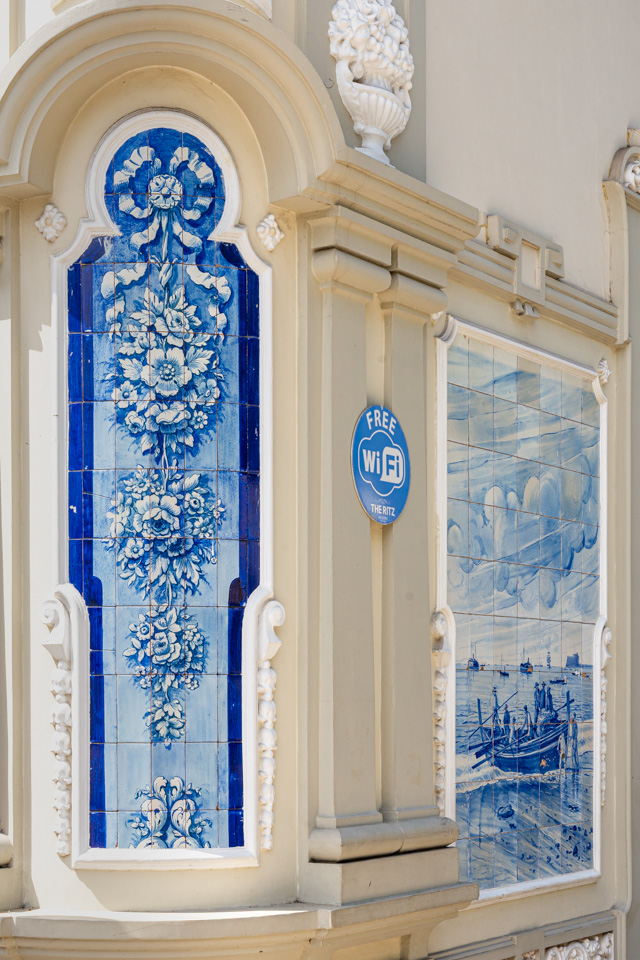
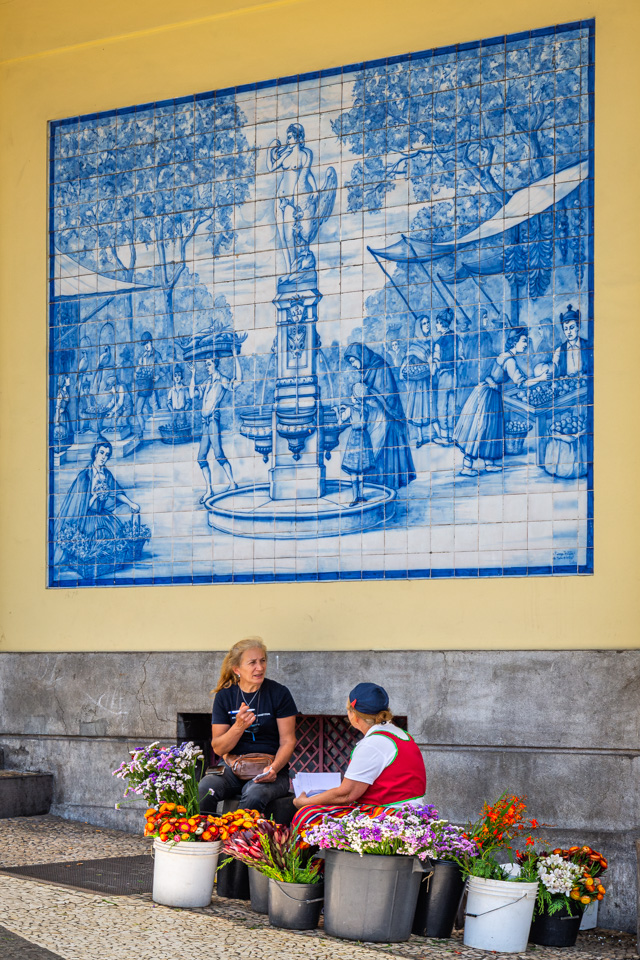
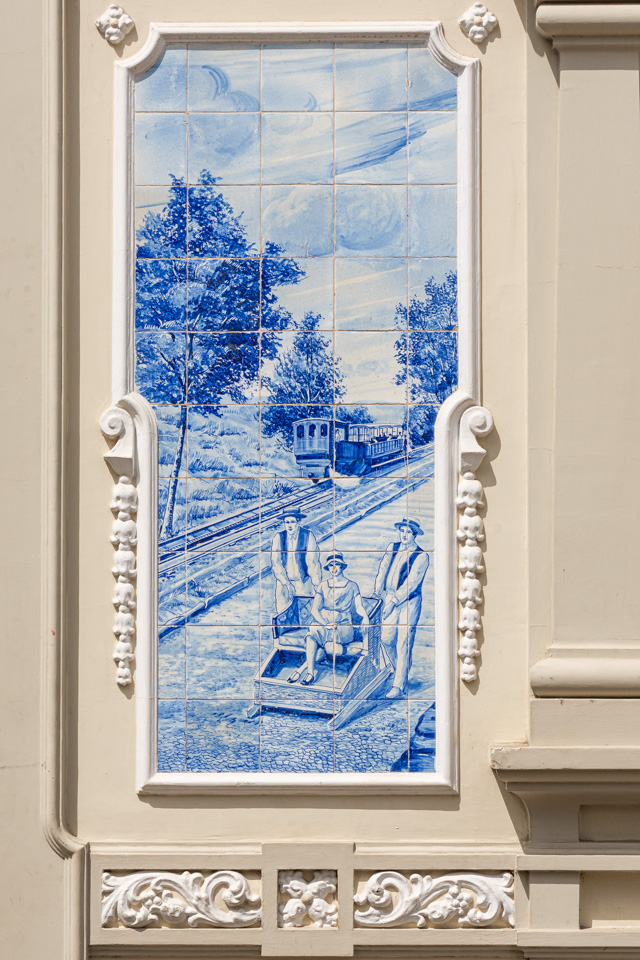
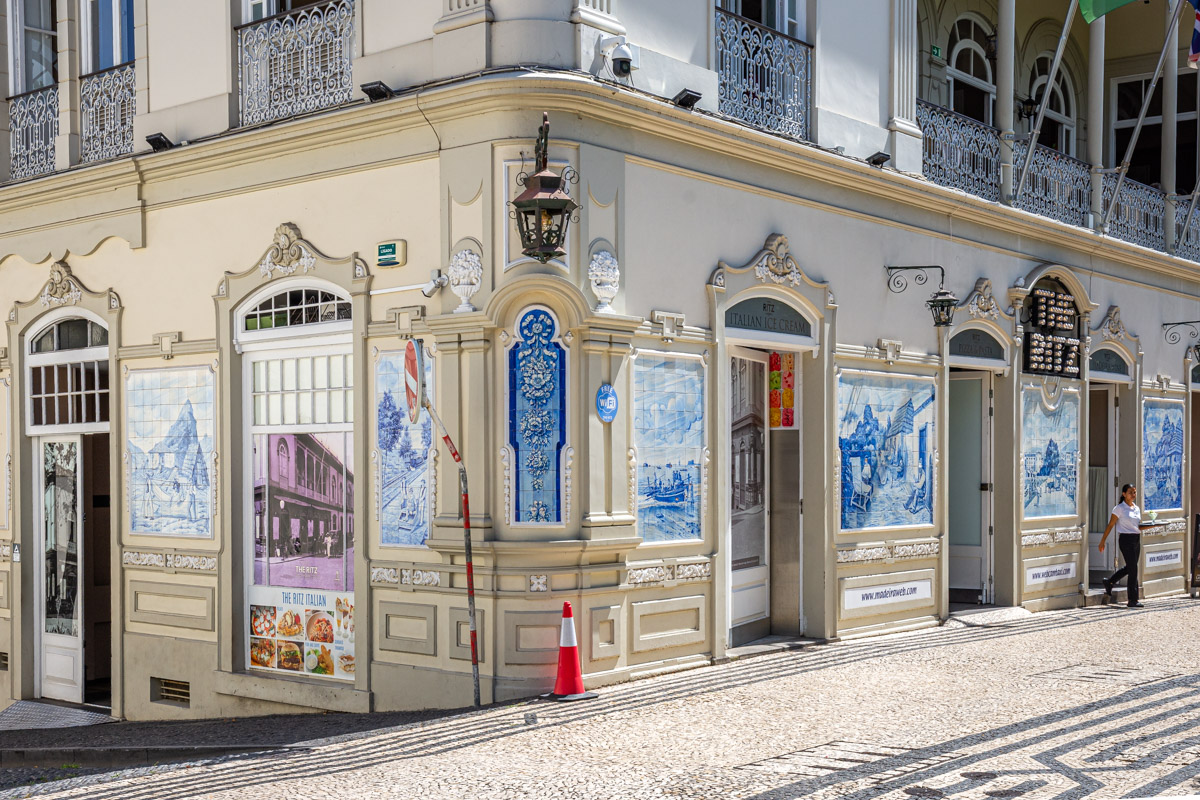
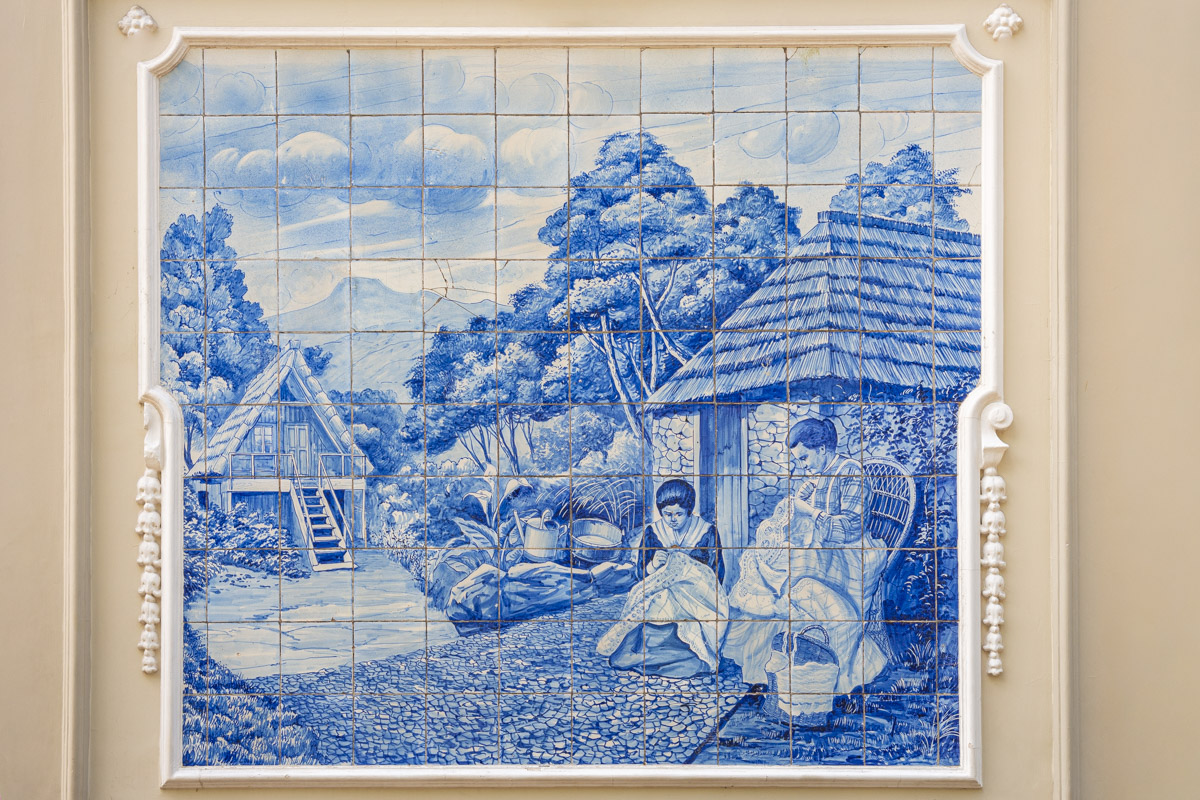
The blue and white colouring of the tiles gave the stories a softer mood, which I found calming.
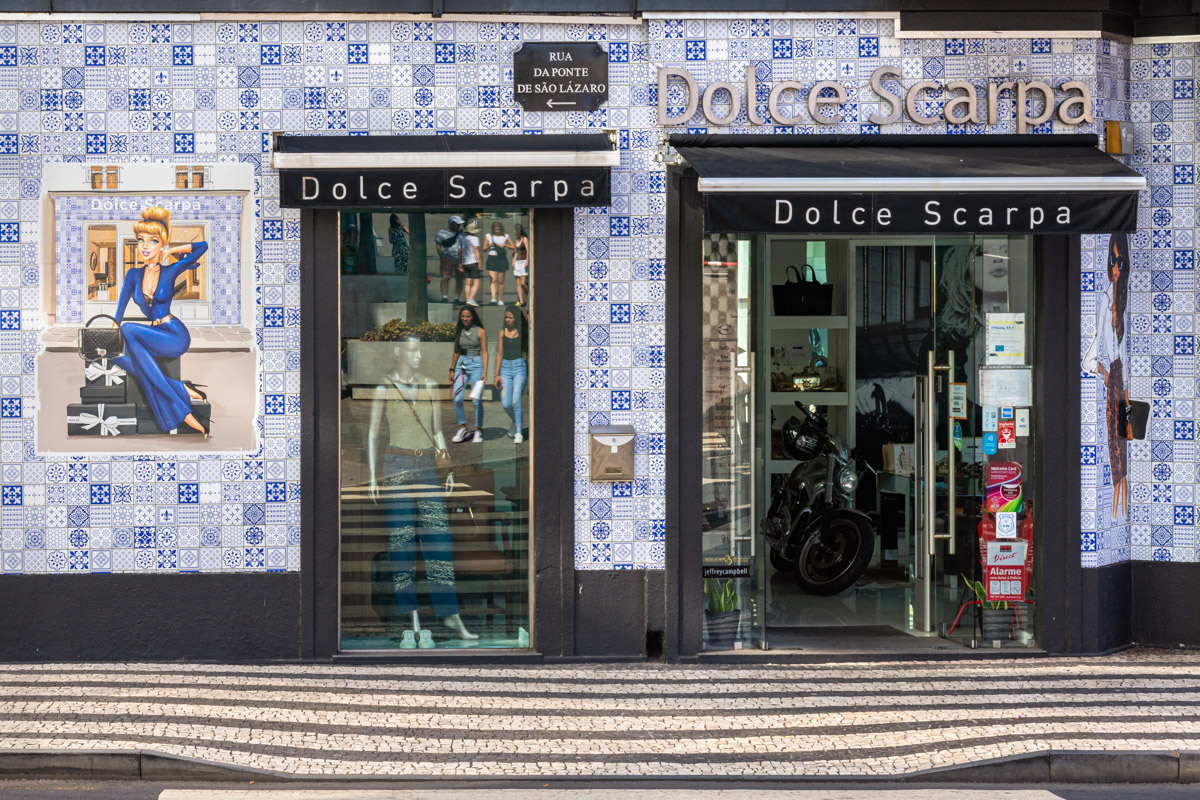
Other tiles, arranged in patterns and pictures, were simply decorating shops and walls. Sometimes with unexpected contrast, such as the small, old-looking blue-and-white tiles on the front of a shop selling modern clothes.

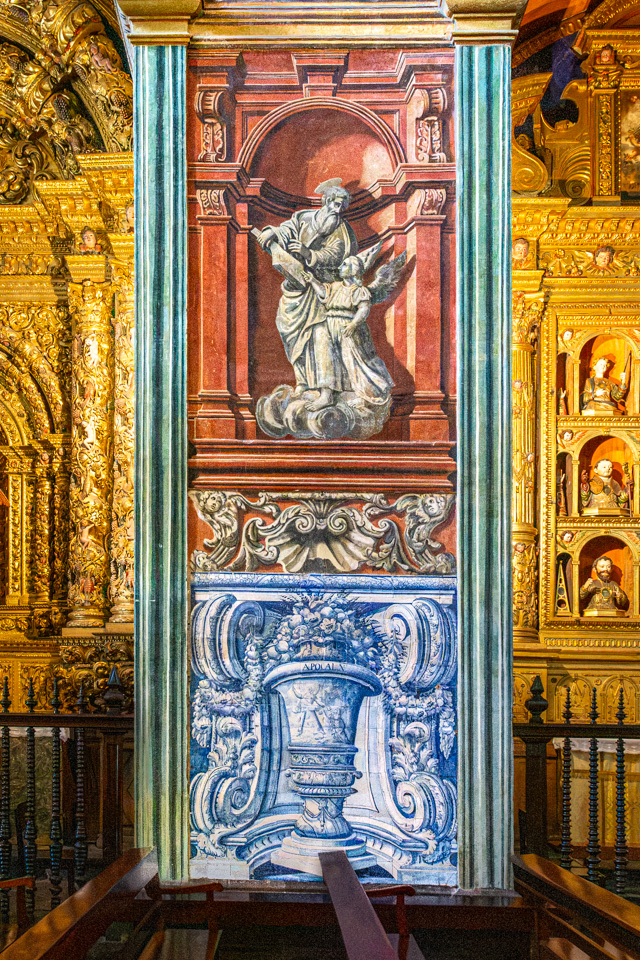
What surprised me most was seeing such blue-and-white mosaics even in a church. In a church, especially a big one, you expect gold, wood, statues and embellishments of every colour. So how did the large images of vases, rendered in bold blue on a white ceramic background, fit in? Surprisingly well, actually, drawing the eye to the statues above them.


After we returned home, a colleague of mine told me she wasn’t very impressed by the mosaics and tiles in Funchal, having seen many more impressive ones in Portugal. Her opinion did not spoil it for me, though. Perhaps because I had never seen anything like it before and the first impression usually feels the strongest? Might be, but I would rather put it down to Funchal itself, which won me over and made me feel good.